British Medical Association
After a review by its psychological medicine committee, the BMA approves the use of hypnosis in medicine, when practised by trained professionals.
An interactive history of hypnosis
Seven rooms. Two hundred and fifty years. A relic to collect in each, and a few secrets hidden for the curious.
Move your cursor, or drag your finger, to search the dark.
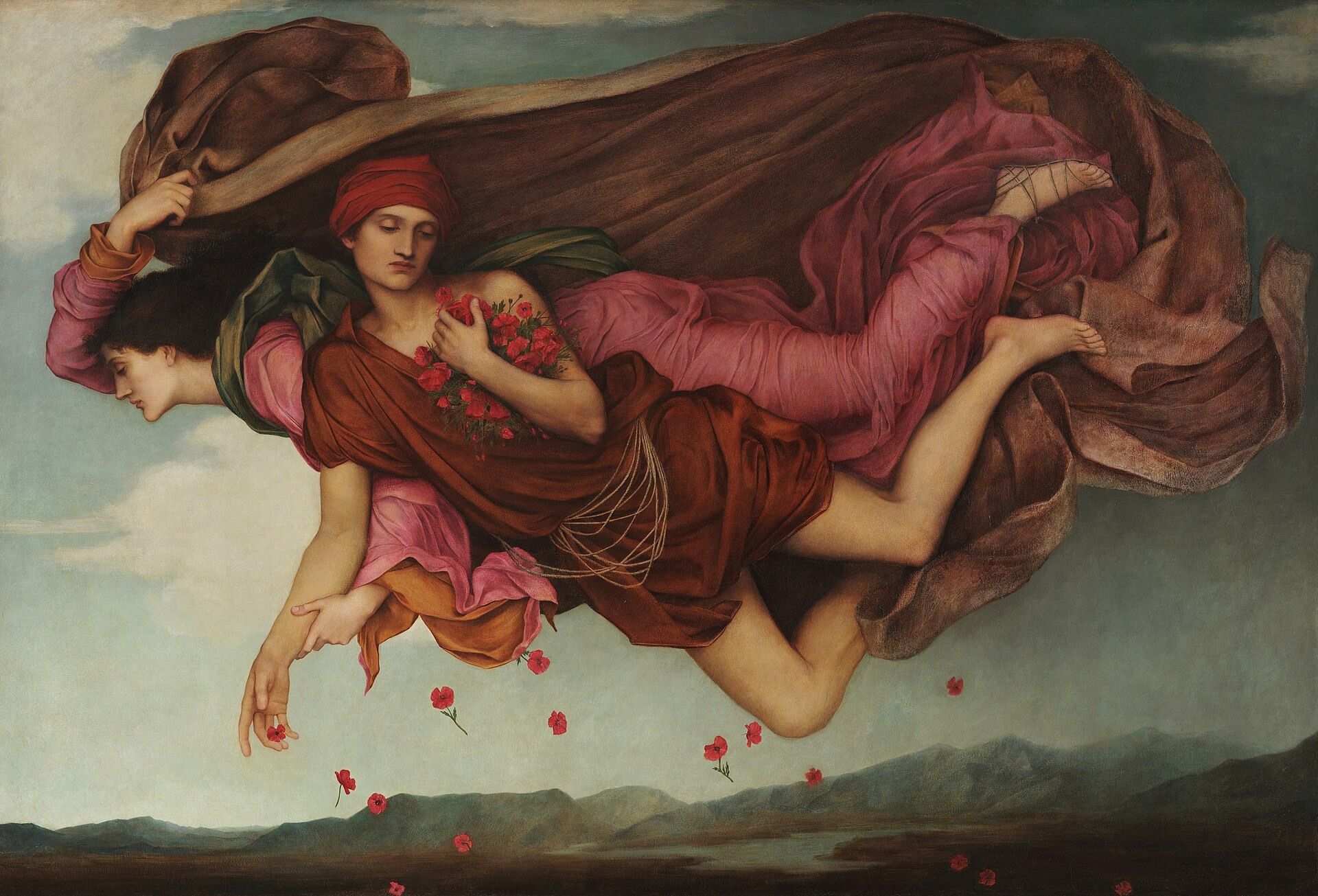
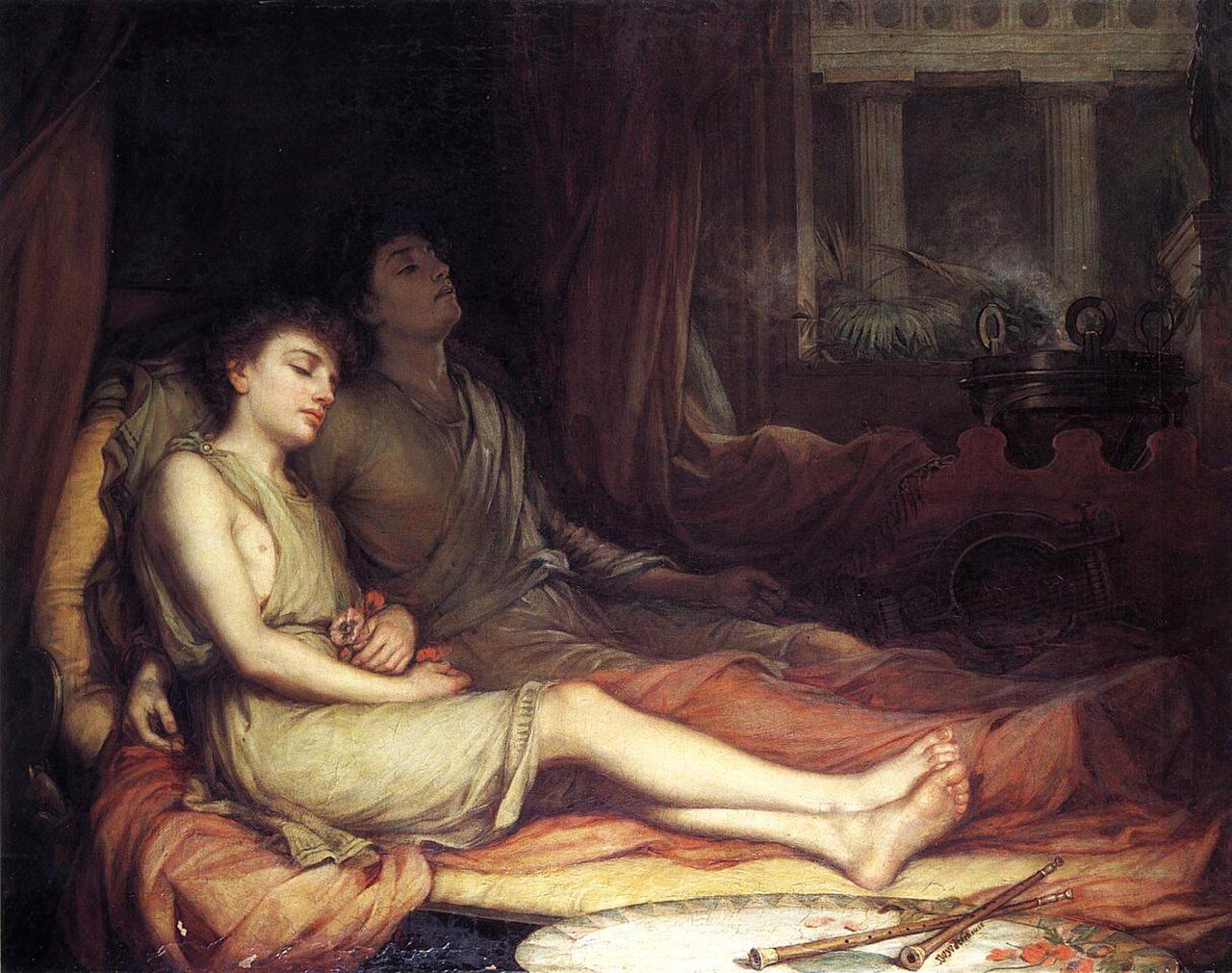
In Greek myth, Hypnos was the god of sleep, the twin brother of Thanatos, Death. The Roman poet Ovid gave him a cave where no light ever reached, with poppies growing at its mouth. When a doctor in Victorian Manchester needed a name for a strange new state of mind, he borrowed Hypnos’s.
The idea that an altered state of mind could heal is far older than the word. For around a thousand years, visitors to the Greek healing temples of Asclepius slept overnight in a sacred dormitory, hoping for a healing dream. It wasn’t hypnosis. But it was the first hint of a question this cabinet is about: can the mind change the body?
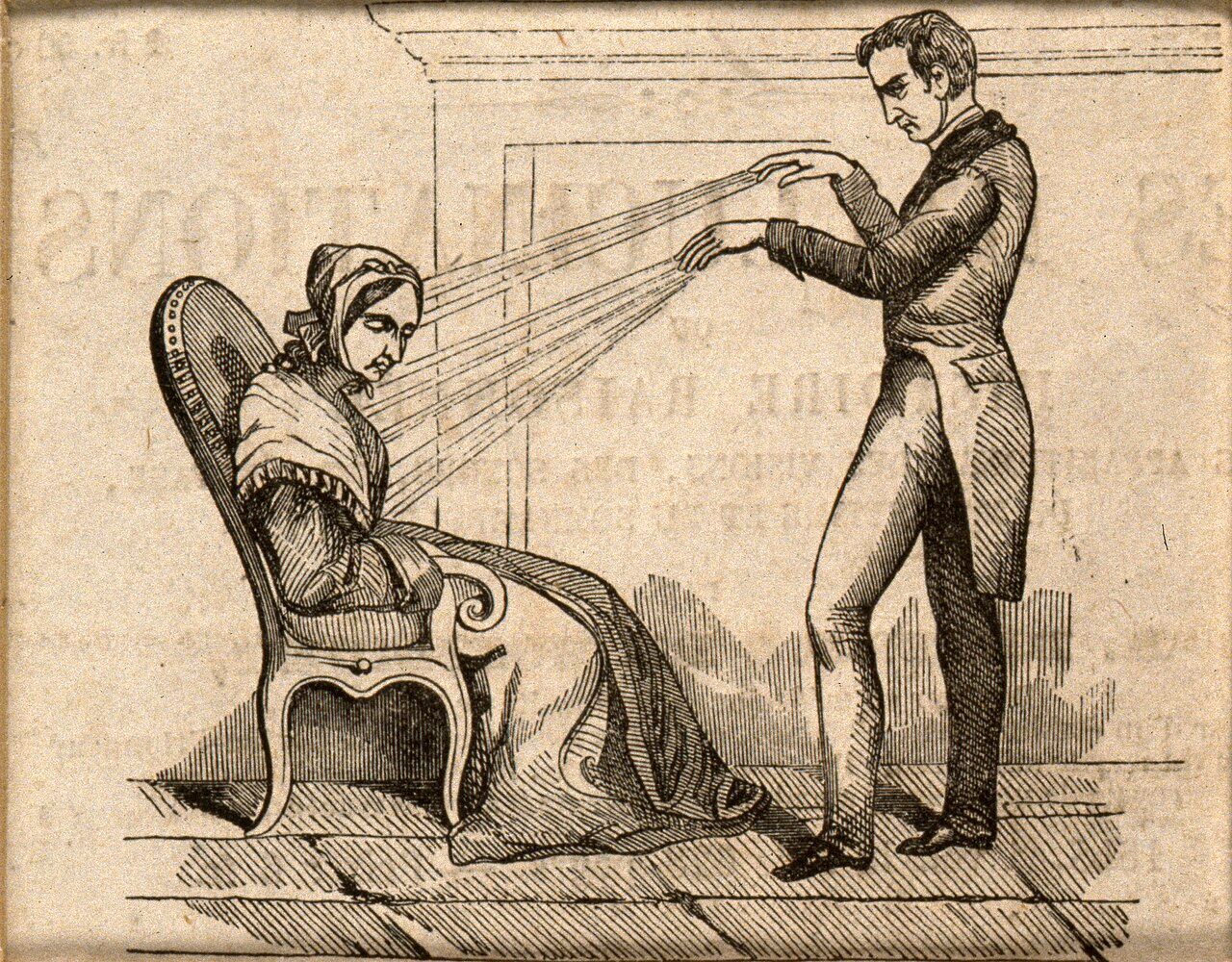
John William Waterhouse, Sleep and his Half-Brother Death, 1874In February 1778 a German doctor who had made his name in Vienna, Franz Anton Mesmer, arrived in Paris with an extraordinary claim. Every living thing, he said, was filled with an invisible fluid. Illness was a blockage in its flow, and he could set it moving again. He called it animal magnetism.
Soon up to two hundred people a day were queuing for treatment. To see them all, he built the baquet: a great oak tub filled with water, iron filings and glass bottles, bristling with bent iron rods. Patients pressed the rods to their aching parts, linked hands and waited, while the eerie music of a glass armonica drifted through the dim room.
Then came the crisis. People laughed, wept, shook and fainted. To Mesmer, this was the fluid breaking through. To Paris, it was the sensation of the age.
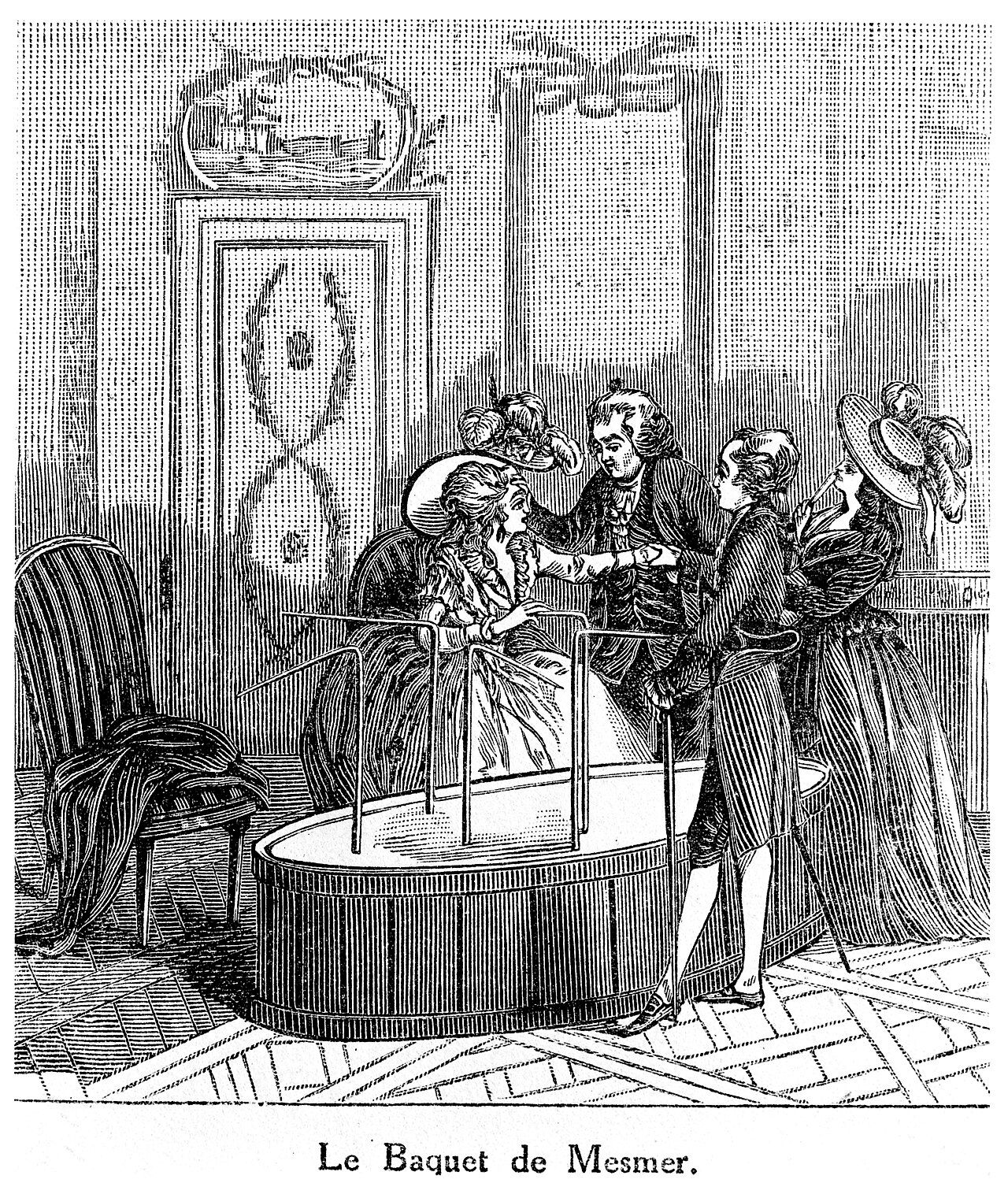
Stir the invisible fluid. Move your cursor or finger across the tub.
By 1784 the King of France had had enough. Louis XVI appointed a royal commission to find out whether animal magnetism was real. Its members included the American ambassador Benjamin Franklin, the chemist Antoine Lavoisier, and a doctor named Joseph-Ignace Guillotin.
They couldn’t see the fluid, so they tested its effects, using a clever trick: they made sure people didn’t know when they were being “magnetised”. Lavoisier designed several of the experiments. It was one of the first times in history that anyone used blindfolds to test a treatment.
The most famous test took place in Franklin’s own garden. You’re about to run it.
Mesmer’s disciple, Charles Deslon, has magnetised one apricot tree in Franklin’s orchard. A twelve-year-old boy, said to be highly sensitive to magnetism, waits blindfolded. Lead him to a tree.
The boy never touched the magnetised tree. Every reaction, right up to his collapse at the fourth tree, happened at trees nobody had magnetised. In another test, a woman fell into a crisis when handed cups that had never been magnetised, then calmly drank from one Deslon had magnetised himself.
The commission concluded that the fluid didn’t exist. The effects were real, but they came from somewhere else: the imagination. In debunking Mesmer, Franklin and Lavoisier had stumbled on something far more interesting: the power of expectation and belief to change how the body feels. Their methods helped shape the blind trials medicine still relies on today.
Nearly sixty years later, mesmerism was touring Britain as a stage show. On 13 November 1841 a Manchester surgeon named James Braid went to see the Swiss mesmerist Charles Lafontaine, fully expecting to expose a fraud.
Instead, he noticed something he couldn’t explain away: the subjects genuinely couldn’t open their eyes. Braid went home and began experimenting. He found he didn’t need magnets, passes or fluid. If someone simply fixed their gaze on a bright object held a little above their eyes, such as the glinting case of his surgical lancet, their eyes tired, their attention narrowed, and the same strange state appeared.
It wasn’t magnetism. It was focus. Try it.
Rest your eyes on the glint. Then press and hold the button below for ten seconds.
Braid needed a name that had nothing to do with magnets. He reached for the Greek god of sleep. Put the pieces together.
_ _ _
In his 1843 book Neurypnology, Braid called it neuro-hypnotism, “nervous sleep”, soon shortened to hypnotism. (A French writer had used similar words a few decades before, but it was Braid who made them stick.) The irony? Braid later realised it wasn’t really sleep at all. The name stayed anyway.
Before anaesthetics, surgery meant agony. In April 1845, a Scottish surgeon in Bengal, James Esdaile, tried mesmerism on a patient before an operation, and reported that the man felt no pain. Over the next few years Esdaile reported performing hundreds of operations, including amputations, using a mesmeric trance as the only anaesthetic. A government committee watched some of them and judged most to be painless.
Then, in October 1846, a Boston dentist demonstrated ether. Chemical anaesthesia was faster and worked on everyone. Drag through the years to watch what happened next.
1844: surgery means pain. Mesmerists tour Britain, but doctors are deeply sceptical.
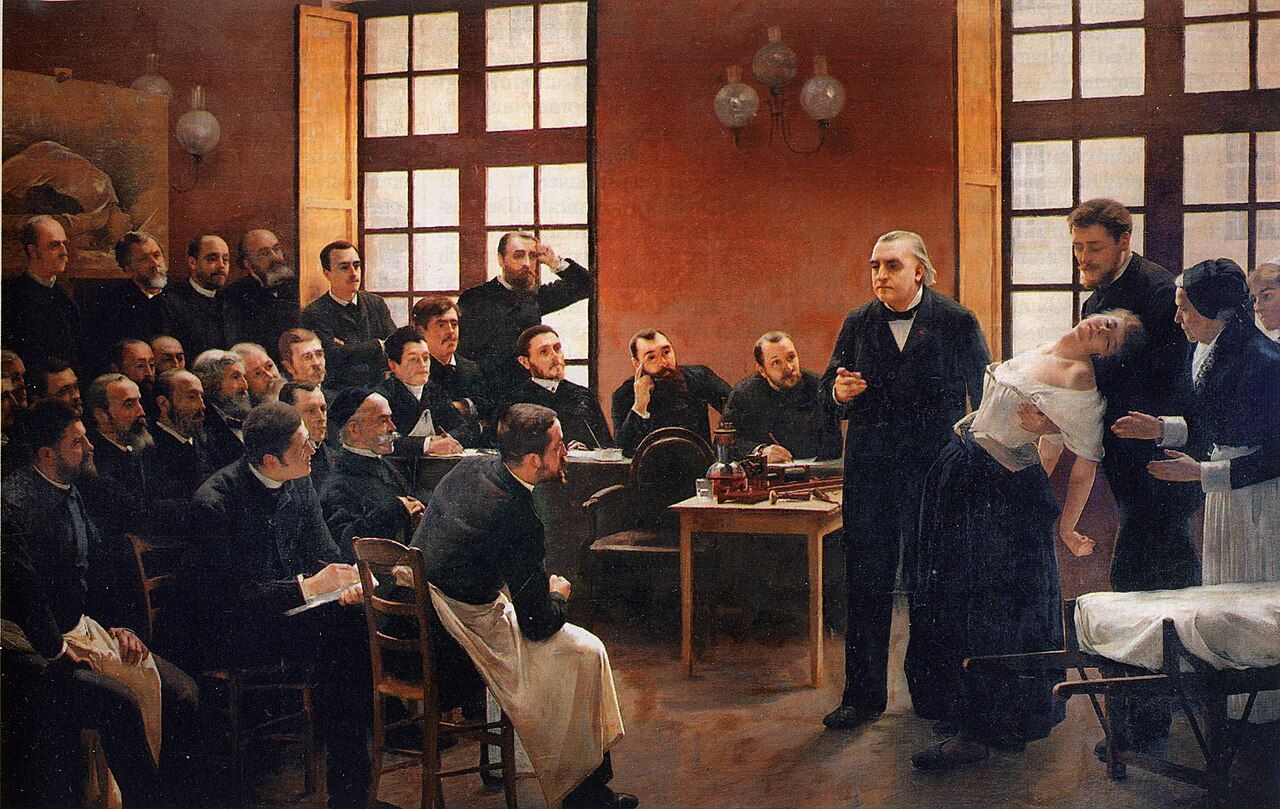
In Paris, the most famous neurologist in the world, Jean-Martin Charcot, gave dramatic Tuesday lessons at the Salpêtrière hospital. He believed hypnosis was a symptom of hysteria, a nervous illness, unfolding in fixed physical stages. A young Sigmund Freud came to study with him in 1885.
In the small city of Nancy, a country doctor, Ambroise-Auguste Liébeault, and the professor Hippolyte Bernheim disagreed. To them, hypnosis was a normal response to suggestion: most people could experience it, and it could help them. Which school said what? Weigh the evidence.
“Only people with a nervous illness can be hypnotised.”
“Hypnosis works through suggestion.”
“Hypnosis passes through fixed physical stages.”
“Most ordinary people can be hypnotised, and it can help them.”
History sided with Nancy. Suggestion became the foundation of modern hypnosis, and near the end of his life, Charcot himself moved closer to Bernheim’s view. Freud translated Bernheim’s work into German, used hypnosis for a time, then went on to invent psychoanalysis.
André Brouillet, A Clinical Lesson at the Salpêtrière, 1887: Charcot demonstrating to an audience of doctors
Through the twentieth century, hypnosis kept proving useful. Doctors used it with soldiers suffering from shell shock. In America, the psychiatrist Milton H. Erickson developed a gentle, conversational style of hypnosis that still shapes how it’s practised, and became the founding president of the American Society of Clinical Hypnosis. Then the medical establishment finally gave its verdict. Press the seals.
After a review by its psychological medicine committee, the BMA approves the use of hypnosis in medicine, when practised by trained professionals.
The AMA’s Council on Mental Health publishes a report on the medical use of hypnosis, recognising it as a legitimate treatment in the hands of trained practitioners.
For two centuries people argued about what hypnosis is. Brain imaging finally let scientists watch. In a study published in 2016, a team at Stanford led by David Spiegel screened 545 people, then scanned the brains of 36 who were highly hypnotisable and 21 who were barely hypnotisable at all.
In the highly hypnotisable group, and only during hypnosis, three things changed. Switch hypnosis on, then tap each glowing area to find out what it means.
Around one in ten people are highly hypnotisable. Most people sit somewhere in the middle.
Switch hypnosis on to see what changed.
Two hundred and fifty years, from invisible fluids to brain scans, and the thread running through all of it is the one Franklin found by accident: what you focus on, and what you expect, really can change how you feel.
Tap the light for three slow breaths.
Paintings and engravings are in the public domain unless marked; Wellcome Collection images are used under CC BY 4.0. This guide is for general interest and education. Hypnosis is not a substitute for medical or psychological treatment. Written by Christopher Bailey, MSc Psychology.